Feeds:
Posts
Comments

Posts Tagged ‘lehigh acres’

South Florida is seeing a big jump in the number of homeowners who are selling their properties for less than they paid, highlighting the magnitude of the region’s historic housing slump.

During the first half of this year, 23 percent of sellers in Broward County unloaded their homes at a loss, according to sales data analyzed by the Sun Sentinel. In Palm Beach County, the percentage was even higher — 27 percent. That’s a significant spike from 2006, when only 2 percent of sellers in each county took losses.
“It’s fair to say that some people are desperate,” said Brad Hunter, a housing analyst in West Palm Beach. “But there are others who regret having bought the house at the price they paid and if they can get rid of the obligation of having to continue paying on it, they’re happy to do it.”

The winners in these fire sales are buyers who are getting houses that are much more affordable. 

“There’s no way we could have afforded a house before,” said Katarina Lytle, 29, a first-time buyer who paid $205,000 for a house that had been listed a year ago at $355,000 in The Acreage. “My husband and I walked out of the closing, jumped in the truck and just screamed.”

Most people dumping properties this year bought during the peak of the housing boom in 2004 and 2005. Many strapped homeowners are negotiating so-called short sales, in which lenders take less than what is owed on the mortgages and forgive part or all of the remaining debt.

In Broward County, one in three home sales in Miramar in the first six months of 2008 went for losses, according to Sun Sentinel research, which did not include foreclosure sales. Coconut Creek, Parkland and Weston also were among the hardest-hit Broward cities.

In Palm Beach County during the same period, West Palm Beach and Palm Beach Gardens both had 34 percent of sellers taking less than they paid. Also hurting were the west-central communities of Royal Palm Beach and Wellington, where property values had soared during the housing boom.

South Florida is among the leaders nationwide in homes and condominiums fetching less than the sellers paid, according to Moody’s Economy.com, an influential U.S. real estate research firm. The current climate is a stunning reversal from the housing heyday of 2000 to 2005, when thousands of short-term investors were buying and selling homes in South Florida and pocketing huge profits, seemingly overnight.

That speculation drove up prices, causing buyers to squeeze into homes by using adjustable-rate mortgages and other risky loans that now are resetting with much higher interest rates. Many of the homeowners no longer can afford the properties and are losing them in foreclosure, dropping values across the board.

That’s evident in South Florida’s shrinking tax bases. Broward’s tax base for homes and condos decreased 9 percent from last year, to $167 billion. Palm Beach County homes and condos are valued for tax purposes at $113.9 billion, off 7 percent from $122.9 billion in 2007.

“We had an awful lot of stretch buying above people’s means,” said Lewis Goodkin, a Miami-based housing consultant. “And we’re really paying the price for it now.”

Short sales

James Diehl bought a three-bedroom house in Wellington for $389,000 in 2005 but quickly discovered South Florida was too expensive. The information technology analyst eventually found a higher-paying job in Atlanta, so he and his wife rented their house here for about a year, but the tenant had no interest in buying it.

Knowing they couldn’t sell the house for close to their mortgage amount and determined to avoid foreclosure, the couple worked out a short sale with Wellington real estate agents Katerina and Nestor Gasset, who found a buyer for $284,000 — 27 percent less than the Diehls had paid.

“The economic burden has been lifted,” said Diehl, 36. “Everything happens for a reason. Now we’ve moved to a place where we can settle down, survive and thrive.”

Homeowners interested in short sales must pass a hardship test, submitting W-2 forms, income-tax returns and other documents to prove to lenders that they can’t afford to stay in the properties.

Banks typically notify credit bureaus that borrowers completed a short sale or that the loan was paid in full with assistance, but that’s far better than losing the house in foreclosure.

A short sale negatively affects a person’s credit for 12 to 18 months and reduces a credit score by 75 to 125 points, according to The Coloney Group of RE/MAX in Fort Lauderdale. A foreclosure, however, stays on a homeowner’s credit report for three to five years and drops a credit score by 200 to 280 points.

Mary Cochrane bought a $290,000 townhouse in Davie for her daughter in 2005. But she didn’t read the fine print on her adjustable-rate mortgage and saw her monthly payments rise a year later from about $1,600 to $2,400. She said the lender wouldn’t modify the loan.

She eventually contacted her neighbor, a real estate agent who suggested she try a short sale. He found a buyer for $175,000 — 40 percent less than Cochrane had paid.

“It was a blessing,” said Cochrane, 60, a registered nurse. “I sleep at night now.”

Wells Fargo, Washington Mutual, Bank of America and Countrywide Financial Corp. are the largest lenders agreeing to short sales, said real estate agent Katerina Gasset. However, agents say the lenders sometimes drag out the process by not responding to offers quickly enough.

But agents say lenders, particularly the smaller ones, are responding more quickly as the housing crisis deepens.

“My feeling is that it’s easier now than it was six months ago, and six months from now it will be easier than it is now,” said Scott Coloney, principal of The Coloney Group.

Loans reworked

Riverside Bank, a community bank with six offices in Palm Beach County, meets with borrowers directly and will consider short sales if their circumstances warrant, said Andy Wells, a Riverside vice president and special assets manager.

But the bank would rather keep the borrowers in their homes, even if that means restructuring the loans, Wells said.

“It’s much more beneficial to us because the bank doesn’t have to take the hit,” he said.

Gerry Thompson bought at the height of the housing boom and soon regretted it.

He paid $585,000 for a Fort Lauderdale home in 2005 for his daughter, an investor. But values started dropping the next year, and the house needed major repairs. Fed up, Thompson sold it five months ago for $380,000 — a 35 percent price cut.

Because he didn’t qualify for a short sale, he had to bring $83,000 at closing to make the deal work.

“I was quite happy with the sale price, although it was considerably less than what we had in it,” said Thompson, 75, who splits his time between northern Florida and North Carolina. “We’re done with the real estate business, believe me.”

Hunter, the West Palm Beach housing analyst, said the mistakes that people have made in this real estate cycle will be remembered for decades.

“What’s happening is historic,” he said. “Much will be written about it in textbooks, articles and essays long after we’re through this.”
Read Full Post »

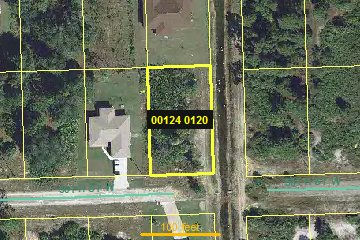
Buy land, they’re not making any more of it. This 1/4 acre lot sells for only $19,000 and no reasonable offer will be refused. Call us on (206) 355-2744 and we can arrange for a fast closing. See additional lots for sale here.

Read Full Post »

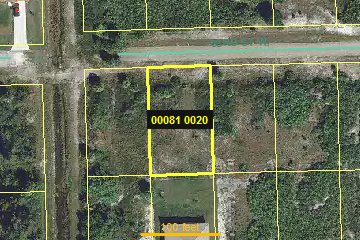
This lot is located in a quiet neighborhood of Lehigh.  Just a couple of houses built across the street and next door, you’ll have plenty of privacy.  This 1/4 acre lot sells for only $17,000.  Call us on (206) 355-2744 and we can arrange for a fast closing. 

Read Full Post »

Across from the private road in Alva is Daniels Preserve, the first property acquired through a land preservation program that allows sellers to name their properties after themselves.

The property, formerly owned by lifetime Alva resident Ruby Daniels, now is publicly owned, and supposed to stay that way forever.

The naming privilege offered by the Legacy Program is fairly new, only 18 months old, and Lee officials are promoting it to help entice property owners to sell environmentally sensitive land to the county, especially in the midst of a slumping real estate market.

Lynda Thompson, coordinator for Conservation 20/20, Legacy’s parent program, said despite the likelihood of less revenue coming into the county next year after a preliminary 12 percent drop in property values, more land can be acquired for preservation because of it’s more affordable now.

“When the market was favorable for land development, people didn’t have the interest (to sell to the county) because there were speculators willing to pay above market value. We couldn’t compete,” she said. “Now we can be more selective, more competitive.”

Property owners have to make the first move and fill out a willing seller form for the county to consider a purchase. A brochure about the Legacy Program is included. So far, two property owners have sold, including Daniels. Another two have made offers.

The county pays for Legacy properties through its Conservation 20/20 program, which costs taxpayers 50 cents for every $1,000 of taxable property value. The county has spent $187.7 million to acquire 85 properties totaling nearly 19,000 acres since voters approved the program in 1996.

“At this point they seem to have an awful lot of land,” said south Fort Myers resident Jack Tanner, who believes voters should have to approve the program again.

Preservation seems to be popular.

“It’s one of the few programs that wherever I go in the county people seem to support it,” Commissioner Frank Mann said.

To qualify for Legacy, a property must be at least 100 acres or have an environmental significance such as connection to other sensitive lands. Other properties can be sold to 20/20 without naming rights.

Daniels qualified for the Legacy option, the first person to do so.

“Being realistic and looking into the future, I knew there was a good chance the property would be sold, and it would be sold to developers,” she said.

Daniels, 69, watched her daughters play on the 243-acre property when they were children. The land has oak hammocks and cypress trees, a pond and headwaters of Spanish Creek, and when money is available to make it a park, it will have hiking and bird watching.

“I decided to do something when I was alive to make sure it would remain in its natural state so the public can enjoy the beauty we’ve always enjoyed,” said Daniels, who sold her property to the county for $3.9 million.

Sam Galloway sold the second property to Legacy shortly before he died. The county bought the 404-acre plot known as Sam Galloway Preserve, located off Corkscrew Road in southeast Lee, for $5.85 million. Technically, he did not request the property be named after him, but county officials did, to honor his commitment to preservation.

“We had people that would have paid more money for the site for development purposes … and that area was prime for mining as well,” said Ed Bonkowski, who brokered the deal with the county. “But Mr. Galloway wanted it to remain a wetland.”

There are two more sites – 125 acres on Pine Island being considered and 541 acres between State Road 82 and Southwest Florida International Airport.

The 541-acre site, known as the Elizabeth and Thomas Muraro Tract, is approved for purchase. Final approval will depend on the property owners’ offer, which commissioners must support to acquire the land.

Elizabeth Muraro and her father Thomas could not be reached for comment last week.

The final site, on Pine Island, became available the same way as the Daniels property. Its owner, Jack Carver, who arrived in Lee County in 1970, wants to preserve the beauty of the area.

“The only way to protect it from development is to preserve it,” Carver said.

The property is known as Carver Preserve and awaits commission approval for purchase. If Carver and commissioners agree on a price, the property will belong to the public.

“This is what makes us different from the east coast” of Florida, Commissioner Bob Janes said. “Preserved open space is what makes the west coast a great place to live.”

Read Full Post »

Lehigh Acres, FL is located in Lee County Florida.  In 2006, the population was estimated at 67,876.  At roughly 61,000 acres, Lehigh Acres is part of the Cape Coral-Fort Myers Metropolitan statistical area which has roughly a population of 571,344.  You can read about Lehigh Acres from different parts of the world wide web

Premium building lots available exclusively from The Florida Land Company, LLC.

Read Full Post »

Just a hop, skip and a jump from Lehigh Acres is Lover’s Key. 

WHERE: Carl Johnson State Recreation Area; Black Island, Inner Key and Lover’s Key

DIRECTIONS: Follow Estero Boulevard south, cross over to Black Island. Sign is on right.

DETAILS: Parking is $5 a car with up to eight passengers, $3 for just one person, and $1 for walk-ins. Fishing is allowed under the boardwalks and at the northern end of the park which borders Big Carlos Pass.

There are acres to explore on nature trails. The beach is pristine and the water is clear. It’s a family affair, but singles looking for a nice beach and less of a meat-market mentality hang there as well. Manatee sightings are frequent. Picnic tables are available on the beach.

Bring your own food/drinks. Canoeing is allowed in the inland waterways. No motorized craft are permitted. Hours: 8 a.m. to sunset.

From the parking area a free tram will take visitors over to the south side of the beach. There is a picnic area along the beach. Dogs are allowed in the park as long as they are on a leash. Call 463-4588.


Read Full Post »

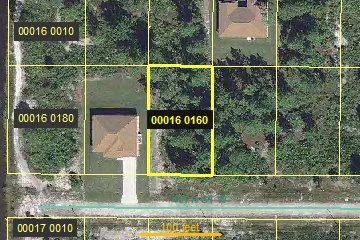
The terrific lot has everything you need ready to build.  Good soils and plenty of room.  Roughly 1/4 acre, this one won’t last long.  Available exclusively from The Florida Land Company for only $17,000.  Call (206) 355-2744 for the best personal service.

Read Full Post »

Florida’s local governments face new requirements if they want to raise taxes

TALLAHASSEE, Fla. – June 9, 2008 – Contrary to popular opinion, city and county governments cannot easily raise tax rates to make up for any income deficit created by January’s passage of Amendment 1. A local tax increase now requires approval by a super-majority of officials, and it must be called a “tax increase” if considered.

The Florida Association of Realtors® (FAR) lobbied for this change during the 2008 session of the Florida Legislature, considering it an important component of the property tax relief offered by Amendment 1, which voters passed on Jan. 29, 2008. The language is included in SB 1588.

Following discussions during the session, the Florida House added provisions to the amendment that would make it more difficult for local governments to raise taxes either overtly or covertly. However, it was unclear whether the Senate would then sign off on those changes, though senators did reach agreement in the final hours of the session.

A few aspects of Amendment 1 must still be clarified. Once Gov. Crist signs the bill – as he is expected to do – additional rules will be analyzed and created. It’s still unclear, for example, how property tax portability will work in cases of divorce or marriage.

Tax increase changes

Under the old rules, a city or county government could raise tax rates with a simple majority vote. Under the new rules, two-thirds of commissioners must approve the tax increase. In addition, it must be called a “tax increase” so voters understand the issue. In the past, some local governments could use creative wording, perhaps something like a “recapture,” to hide the actual topic.

The average homeowner in Florida should save about $240 on their 2008 tax bill and many local governments are cutting expenses. A few, however, have considered some kind of tax increase to make up the difference. Under SB 1588, though, it will be more difficult.

“This was a big loophole, and people really got angry over it,” says Charlotte Greenbarg, president of a Broward Coalition that represents area homeowner and condo associations. “I have no doubt some cities would have (raised taxes) if they could do it quietly and try to say it’s not a tax increase.”

“The voters believed they did one thing, and there shouldn’t be a crack in the dam to negate their action,” says state Rep. Ellyn Bogdanoff. “It’s not horrible to ask them to get a super-majority.”

Source: South Florida Sun-Sentinel, Scott Wyman, June 5, 2008.

Read Full Post »

The Lehigh Acres Lot Owners Association will post a no trespassing sign on your lot…just ask!

NO TRESPASSING SIGN MAY ALSO DETER DUMPING

We have been asked by several members if this association would be interested in putting “No Trespassing” signs on vacant property due the numerous inquiries in regard to Notice of Code of Violations being mailed to lot owners from the county.

We asked our attorney if he thought there would be a benefit to lot owners to install a “No Trespassing” sign on their property and his response is below:

“Sometimes refrigerators, air conditioning units, or construction debris -even old cars- are abandoned on vacant lands. Out of state owners of vacant lots usually find out that trash has been dumped on their land when they are contacted by local code enforcement officers who have received a complaint from an irate neighbor.

The county may institute code enforcement action against an owner who fails to remove the unsightly items. Fines and penalties may be levied against those who ignore the proceedings.

What can you do to deter dumping? One solution is to put up a “No Trespassing” sign.

Florida courts have held that posting is a valid device for preventing the uninvited from trespassing on private property. Dumping trash on posted land is evidence of a trespass.

But when you live thousands of miles away from your land such a relatively simple task is not so easily accomplished. Here’s a solution. Contact your Association and ask that it post a conspicuous “No Trespassing” sign on your property. For a nominal charge, the Association will take care of that matter for you.

The Association already provides its members with a policy of insurance that protects against liability from persons who may be injured on your land. Why not take the extra step of posting a “No Trespassing” sign? It may be just the deterrence that is needed to keep the uninvited off your land and to discourage dumping.

Law enforcement officers may arrest someone who is trespassing on posted land. The penalty is punishable as a third degree felony”.

Due to the anticipated volume, we can do this for only $75.00 per lot. If you have more than one lot together, we could install the sign between them for the same price. If the lots are not together there would be an additional charge of $75.00 per lot. We will mail you a photograph of the sign on your lot(s) as proof of installation or we can e-mail you a photograph, whichever you prefer.

If you are interested in having a “No Trespassing” sign placed on your property, please contact our office at 1-800-376-9045, or e-mail our office at laloa@cfl.rr.com or fax our office at 1-386-424-0159 with a credit card number. If you would like to order this service with a check, please make payable to L.A.LO.A. Inc. and mail it to: L.A.L.O.A., P.O. Box 1590, New Smyrna Beach, FL 32170.

Read Full Post »

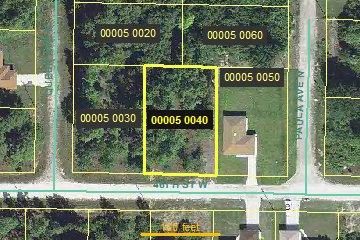
This beautiful corner lot has fantastic neighbors.  Available exclusively from The Florida Land Company for only $17,000!  Call us today on (206) 355-2744.

Read Full Post »

Older Posts »